Friday, October 21, 2016

Top 5 Moments of the 2016 MLB Season: Fourth Quarter

We’re a couple weeks into the postseason here but I wanted to make sure I stayed true to my word.  Here we go:

5. David Ortiz sets final season home run mark.


It was a magical season for the Large Father, surpassing expectations of just about everyone in the baseball world.  On September 20th, Ortiz launched his 36th home run of the year to put himself ahead of Dave Kingman for the all time final season home run record.

4. Gary Sanchez reaches 20 in record fashion.


I’m not sure if he’ll win Rookie of the Year because he’s had such few at-bats, but he has just as good a case as any, if not better.  Sanchez burst onto the Major League scene once again in early August after just two at-bats in 2015, and took the league by storm.  On September 27th, Sanchez tied Wally Berger of the 1930 Boston Braves for the fastest to hit 20 home runs.

3. Miguel Cabrera collects his TWELFTH 100-RBI season.


We may be looking at one of the best, if not the best, pure hitters of this generation in Miguel Cabrera.  With a triple crown and back-to-back MVP awards, Cabrera is well on his way to the Hall of Fame.  On September 27th he moved one step closer by recording 100 RBIs for the 12th time in his career.  For a 33 year old, that’s pretty damn good.  He becomes just the 9th player all time to reach the 100-RBI mark 12 times.

2. Dodgers clinch the NL West in Vin Scully’s final home game.


Vin Scully is perhaps the most legendary baseball broadcaster of all time, having been the voice of the Dodgers since their days in Brooklyn.  Before the 2016 season, Scully had announced it would be his last in the booth, capping off an eventful 67-year career.  On September 25th, Vin Scully’s final game at Dodger Stadium, infielder Charlie Culberson drilled a walk-off homerun to left field to give Los Angeles its fourth straight division title.

1. Dee Gordon lifts Miami.


I don’t think any of us will ever really get over the death of Jose Fernandez, not only because of how sudden it was, but also because of how great of a person he was both on and off the field.  After news broke of the star pitcher’s death on September 25th, the game between the Marlins and Braves was cancelled.  The next day, the Marlins began a three-game series with the Mets.  Lefty hitter Dee Gordon took the first pitch of the game from the right side of the plate out of respect for his teammate.  On the third pitch, he did this:


Miami defeated New York 7-3.


What a season.  2016 did not disappoint.


Sunday, October 16, 2016

Five Products of the Times: Part I

As a bit of a disclaimer to this blog, in my own opinion it is generally unfair to compare athletes of two separate eras.  That being said, it is still interesting to at least think about, which is why I came up with this two part discussion of what I call "products of the times", which will focus on five players from two different eras of baseball.  What I have here are five players from the game's early stages that were directly affected by the era during which they played, and whom I feel would have much different careers and legacies if they played in the 21st century.  Let's take a closer look at those names:

5. Honus Wagner 


(National Baseball Hall of Fame Library)

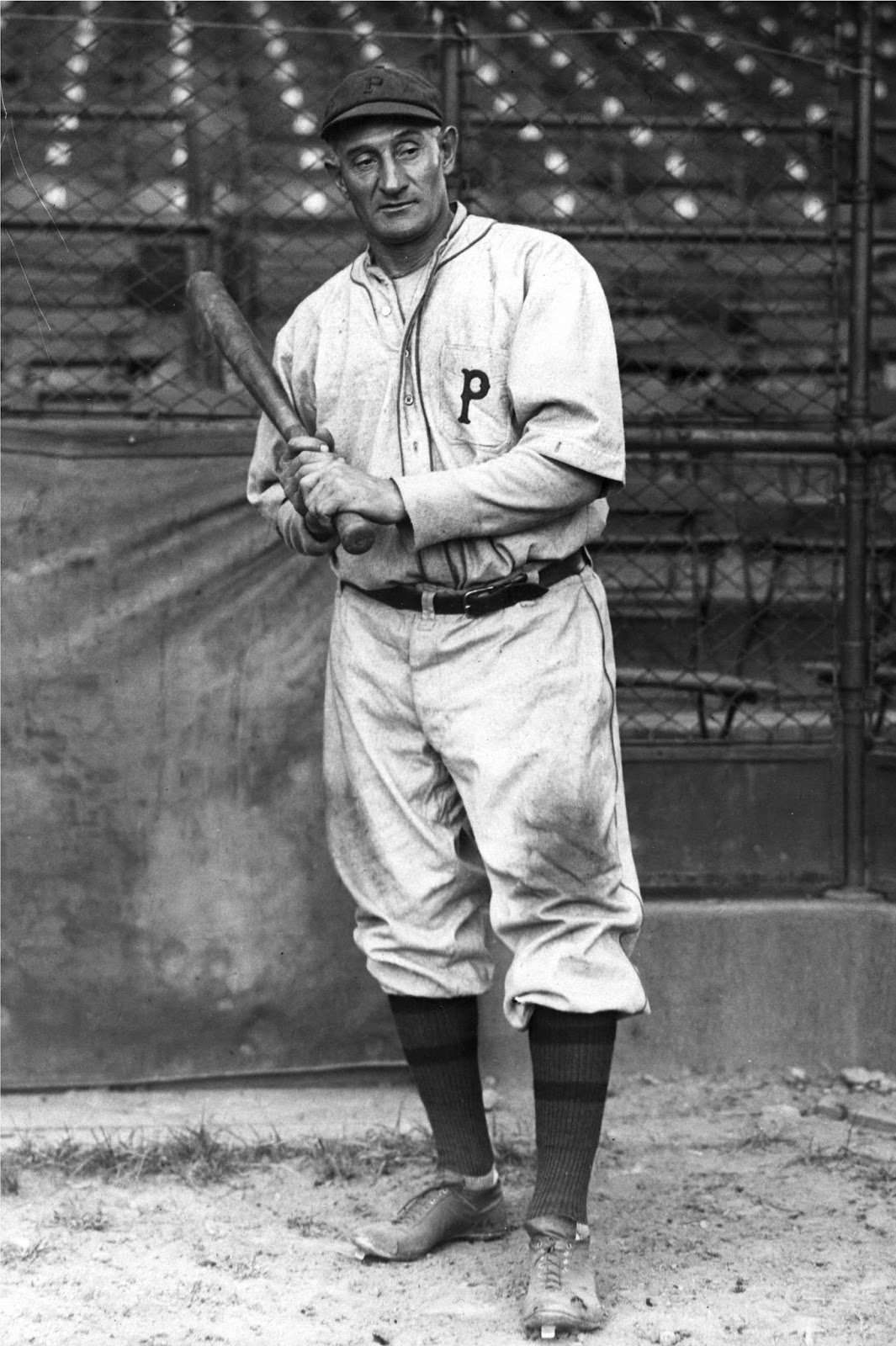
He’s often referred to as the smartest baseball player of all time.  Wagner played nearly every position at some point in his career, and dominated the baseball world during the early part of the twentieth century.  So what would things look like today?  Well, to be honest, I think his career would be even better because of the supporting casts he would have around him.  In today’s game there is such a premium on defense because so many pitchers rely on a solid core behind them, and Wagner’s ability to command the field at shortstop would only benefit whichever team he would play with.  Wagner had the ability as a hitter to adjust to many styles of pitching as well, and with so many different relievers and specialists I imagine it would play right into his strength.  Of course, the other major component of Wagner’s career was his image on the famous T206 baseball card, which became valuable after he requested not to be associated with tobacco advertisements on the back.  His brand is defined so heavily by this card that he would not be as prominent today, simply because we do not see baseball cards with tobacco advertisements on the back anymore.

4. Joe DiMaggio


(joedimaggio.com)

Joe DiMaggio would never achieve his famous hit streak in today’s league.  It just wouldn’t happen, plain and simple.  The long-time Yankee was one of the best center fielders of all time, but with so many specialist pitchers and ways for teams to get certain players out, DiMaggio’s greatest achievement would have fallen short some twenty games or so.  If you don’t believe me just look at the numbers.  Pete Rose, arguably the greatest contact hitter of all time, stopped “short” at forty-four games, while Jimmy Rollins came the closest of any 21st century player with thirty-eight games.  Thirty-eight is A LOT, and he still came up eighteen games short.  DiMaggio’s career-defining accomplishment would essentially not exist if he played in the 21st century.  Historian John Thorn also claims that DiMaggio’s style of hitting would make him much more vulnerable against today’s pitchers who throw much harder on average than those from the early 20th century.

3. Ty Cobb


(mlb.com)

Aside from Pete Rose, Ty Cobb may arguably be the best contact hitter that baseball has ever seen.  His personality on the other hand, as many believe, may have been one of the worst.  Ty Cobb is revered as a player, but fans will tell you that he was one of the nastiest individuals to ever set foot on a baseball diamond.  While much of the Ty Cobb legacy isn't true, the public still developed a perception of him that has stuck with his name for decades.  If Ty Cobb had played in the 21st century, in the age of social media, his legacy may have been severely tarnished due to how quickly stories can become viral.  Additionally, the average fan today will often times connect a player’s on-field career and off-field career, which would not necessarily bode well for Cobb.

2. Cy Young


(NNDB)

511 career wins.  It’s insane to even think about, let alone accomplish such an astounding feat the way Cy Young did.  It’s certainly the reason why we annually recognize the best pitcher from each league with an award in his name.  What if he pitched against today’s lineups though? Without question, he would not nearly have as many wins as he collected during his famous career.  Young played at a time when balls were often reused, not replaced every single time one went out of play.  Over the course of the game the ball would become altered and therefore much harder to hit.  Young also pitched complete games most of the time, and with today’s heavy use of bullpens and much deeper lineups, Young would not have the same numbers as he did for twenty-two years.

1. Babe Ruth

(National Baseball Hall of Fame Library)

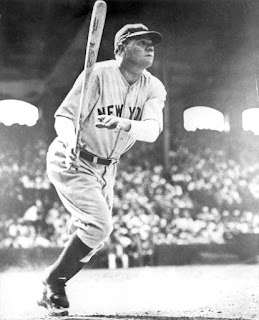
Babe Ruth is perhaps the most influential player in Major League Baseball history, both on and off the field.  Now, in my honest opinion, it would be unfair to say that Ruth would have been better or worse on the field in today’s league because we really don’t know.  Pitchers throw harder now but the ball also travels farther.  Ruth would also likely use a lighter bat than his famous 42-ounce lumber.  But what really set Ruth apart from other athletes in his day was his ability to influence the media.  Newspapers and radio built him up to be a hero, so many of his antics off the field were often times kept from the public.  Just as in Ty Cobb’s case, social media would affect Babe Ruth in a massive way because news could be spread much more rapidly and with much less of a filter than during Ruth’s time.  A great deal of what we perceive about Babe Ruth was because of the writers, and if he played today we may not hold him in the same light.

Sunday, October 9, 2016

Baseball's Five Most Influential Seasons

It's pretty obvious that baseball is my favorite sport.  It always has been.  And much like a lot of others I'm fascinated by how the sport developed over the years, particularly at the Major League level.  Here are five seasons that I believe to be the most influential to Major League Baseball's development:

5. 1941


(Bettmann/Corbis)

Our fifth most influential season checks in with a couple of unbreakable records, and careers that would dramatically change.   It was the most recent year baseball saw a .400 hitter in Ted Williams, and most likely the last.  Not to mention, that kid in the Bronx recorded a hit for a lot of games in a row—56 to be exact.  It was naturally one of the greatest offensive years the league had seen, with records surpassed by nobody for the last 75 years.  That December, Pearl Harbor catapulted the United States into World War II. Star players, including Williams, would sacrifice parts of their careers to fight for their country.  The players’ decisions to fight altered the course of MLB history, both through their shortened careers and their places as heroes in the sport and society.

4. 1919


(National Baseball Library)

1919 was one of the most controversial years in early twentieth century Major League Baseball.  The massive scandal surrounding the Chicago White Sox intentionally throwing the World Series allowed the commissioner to flex his muscles, and let future players know what the consequence would be for gambling in baseball (looking at you, Pete Rose).  Eight total players were banned from the league, giving way to the term “Black Sox” that we infamously use in baseball lingo today.  Perhaps a story just as big came during the offseason, as Babe Ruth was formally sold to the Yankees.  This would give birth to not only the most famous rivalry in baseball, but also professional sport history.  For such significant events to occur in the league’s early years was a sign that there would be many ups and downs for years to come.

3. 1935


(AP Photo)

There was not much going on in the baseball world in 1935.  Well, not much except one of the most revolutionary ideas in both baseball and other professional sports.  1935 saw the first Major League Baseball night game.  The concept of night games didn’t just make viewing a game in the dark easier—it welcomed a new demographic of spectators into the sport.  All of a sudden, people who worked during the day could still go and see baseball games because they were played after working hours.  Night baseball eventually translated well to television as teams could secure primetime slots to gain exposure to the rest of the nation.  Today, night games have very much become a regular, almost necessary, aspect of the season.

2. 1922


(David Greenberg)

While nothing particularly special occurred within the scope of the actual season, May 22nd was the sole reason Major League Baseball exists as it does today.  On this date, the MLB gained a special antitrust exemption from the Supreme Court despite multiple factors that violated antitrust laws.  Similar to the other major professional sports leagues, the MLB is essentially a monopoly and can prevent any sort of rival league from gaining traction.  The Supreme Court decision helped Major League Baseball remain the single major professional baseball league in the country.  In terms of antitrust laws, Major League Baseball should technically be illegal but it has continued to exist throughout the years and will never give way to anything else. 

1. 1994


(Getty Images)

It was the year the Montreal Expos were going to win the World Series. Okay, that’s not THE reason but it would have been awesome.  1994 was actually one of two seasons in the Modern Era in which a World Series was not played. Why? Well, simply put, the season stopped on August 11th.  It was a shame too, since Tony Gwynn was hitting .396 at the time and Ken Griffey Jr. was chasing Roger Maris’ 33-year-old home run record. The players decided to strike as a response to the new collective bargaining agreement that was set to take effect the following season.  In that new CBA, the league would operate with a salary cap that would have restricted player salaries.  The owners would have had much more power and money than the players, so the players decided to strike until an agreement was reached.  The two sides eventually came to terms and as we know today, there is still no salary cap. Since 1994 there has been labor peace in Major League Baseball, far surpassing the other three major leagues that have each experienced some form of labor conflict in the last six years.

Sunday, October 2, 2016

Five Takeaways from PGA Tour, Inc. v. Martin

As many golf fans know, a significant portion of the sport is deeply rooted in history and tradition.  Part of this has been that PGA Tour players walk during competition while their caddies carry their bags for them. 


(AFP/Getty Images)

For many, including current Oregon golf coach Casey Martin, the PGA Tour dream starts with qualifying school, or “Q-School” for short.  Martin, who has a circulatory problem in his leg that hinders his ability to walk a golf course, was initially denied access to a golf cart during the third round of the 1997 Q-School competition.  He would later file a lawsuit against the PGA Tour, claiming that the Tour violated the Americans with Disabilities Act (ADA) of 1990.  In a case that went to the Supreme Court, Casey Martin won 7-2.  Here are my five takeaways from such a groundbreaking event:


5. The PGA Tour REALLY loves its tradition.


It has been the story since the PGA Tour’s inception: players walk.  The ruling left a bitter taste in the mouths of some notable names though, including Jack Nicklaus and the late Arnold Palmer.  Nicklaus is even on record saying, “The idea is having a level playing field.  That’s all the tour wanted to have...everyone playing under the same rules.”  From the PGA Tour’s standpoint, this was a tough pill to swallow after falling victim to the literature of the ADA, which prevented the Tour from discriminating against Martin’s disability in a place of public accommodation.   Martin’s use of a cart was deemed not to be an advantage over the competition, but that it brought him to the same level as the competition.  In an environment dead set on having its competitors walk, this obviously did not sit well with the PGA Tour.

4. No Martin, no Pistorius.


One such athlete that obviously comes to mind in a case such as this is former Olympic sprinter Oscar Pistorius.  During the amputee’s tenure over the last few Olympic games, many spectators and officials questioned whether his prosthetic legs would give him a competitive advantage over the rest of the field.  Pistorius, of course, was able to legally participate in several of the Olympic games and while his specific case isn’t a direct result of Martin’s triumph over the PGA Tour, the two are related enough that I question whether Pistorius would have been able to compete had it not been for Martin’s victory.

3. Casey Martin is extremely resilient.


Most players with a disability wouldn’t even think to keep playing a sport that caused them discomfort.  Casey Martin was much different than most players though, and fought his way through the legal system to ensure that he could continue to compete.  Three years after the initial incident at Q-School, Martin stood up to the PGA Tour and enabled himself to be able to play despite such steadfast rules and regulations from the Tour.  In 2012, Martin qualified for the U.S. Open at forty years old and still received permission to use a cart in competition.  He did not use his disability as bargaining power, but simply pointed out a legal flaw in the PGA Tour’s regulations that could allow him to compete with everyone else.  I’m sure if you even ask him, he likely doesn’t want to be known as a good disabled golfer, just a good golfer.

2. A new demographic is born.


Similar to my argument with Oscar Pistorius, Martin’s victory in the Supreme Court opened up a new demographic of golfers: disabled.  His ability to gain access to a cart during competition could open up the door for players in similar positions to continue pursuing a career in golf.  While their disabilities may hinder their performance on the course, they can at least rest assured that Casey Martin stood up for anyone trying to compete at their best possible level.

1. The Supreme Court got it right.


It’s weird to say this because I am such a passionate follower of the sport and I’m so used to seeing the players walk out on the course.  Even I walk whenever I can!  But the Supreme Court’s ruling in favor of Casey Martin was not only correct, but also necessary.  The Tour generally attempts to implement a fatigue factor by having its players walk, but Martin was already behind physically despite his skill.  The PGA Tour season obviously takes place on golf courses, which are defined as types of public accommodations where discrimination based on disability is not allowed.  Furthermore, Martin’s use of a cart was deemed to not “fundamentally alter the nature” of the competition because Martin was already disabled.  Again, I truly believe the ruling was necessary, especially because it protects golfers who want a shot at competing despite physical ailments.  Casey Martin was the voice for every single one of those players, past and present.